
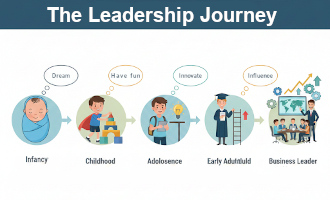
 We’ve often heard the phrase that Leaders aren’t made, they are born. Or, he/she is a born leader. But the truth is that Leaders are indeed “made”. No one comes out of the womb ready to lead. Sure, personality is important but leadership isn’t about personality alone. There are exceptional leaders that are extroverts and exceptional leaders who are introverts. Exceptional leaders can come in all shapes and forms; from pragmatic and factual to excited and idealistic.
The essence of leadership is about having the skill set to build a motivated team of people that get the right things done, at the right time, the right way.
In the long list of skills required to accomplish this, one of the most important skills needed to be a truly great leader is “people skills”. That in itself requires definition, and I’ll do that in a bit, but it’s safe to say people aren’t born with people skills. It is a learned behavior that is instilled from infancy and can continue to be nurtured until the day you die – or more likely, until it no longer matters to you.
The title of this post is “The Leadership Journey”. A more apt title may have been: “The Ongoing Development of People Skills Needed to be a Great Leader, From the Day You are Born Until the Day You Don’t Care Anymore”, but that’s a bit windy.
What are the people skills needed to be a great leader? Firstly, I’ll submit that, in business, the people skills needed to “maintain” a leadership role are not the same skills needed to “obtain” a leadership role. And, since I did call the article “The Leadership Journey”, maybe I should focus on the people skills needed at various levels throughout life.
Leaders
Childhood Leaders (Bosses)
We’ve all seen or heard of the kids in playground or classroom that others gravitate towards. Kids that set the pace, establish protocols and make the rules. Kids that, without even being conscious about it, other kids want to follow. As a child, the skills these children deploy are primitive but complex. The child “bosses” that others want to follow aren’t the bullies that shout the loudest (although these may attract similar children) they are the ones that know how to have fun and how to help others have fun with them. They treat others with kindness, they share and they collaborate. They help others see the potential benefit of doing things with them.
Youth Leaders (Cool Kids)
Leadership evolves between kindergarten and 8th grade. It is still important to be the person that is “fun” but it is also important to be the person who adults (people of influence) enjoy being with. These leaders understand the rules and understand how to navigate within them and push the envelope to achieve more. Non-leaders in this age group are stuck in the “pushing” people to do things instead of “pulling” or enticing them.
Adolescent Leaders (Change Makers)
At some point, and this can certainly happen earlier than adolescence, young leaders start looking for ways to improve themselves and their surroundings. They attract people to the idea of “making things better”. They have an intuitive understanding of leadership and they often see challenges as opportunities. They work to help others see their vision for improvements.
Young Adult Leaders (Having a Mission)
Somewhere along the way, young leaders move their thinking towards goals or achievements of objectives that are often altruistic. Their lives take on a sense of purpose. They attract others that have similar goals and they help others move towards their goals as they move towards theirs.
Business/Professional Leaders (Having Ambition)
The next step in the evolution of leadership usually involves a personal ambition to achieve more: both from themselves (personal growth) and for themselves (rewards). These leaders have picked up the skills necessary to clearly establish what it is they want to achieve and why they want to achieve it. Ambitions at this point can seem personal but in reality the goal is to achieve a position where, by design, larger accomplishments and larger rewards are achievable.
Corporate Leaders (Living a Vision)
Once these leaders have been rewarded with a position of sufficient power or recognition to achieve their goal, they continue to surround themselves with like-minded team members that have the skills and passion to achieve their vision. Exceptional corporate leaders have learned throughout the various stages of the leadership journey that building a trusted team of talented advocates is the key to mutual successes.
Arch Nemesis
Arch Nemesis may be a bit strong but the point here is that, from the very early stages, just as a Leader needs to surround themselves with the right people, they need the skills necessary to avoid or render impotent their opponents.
Childhood Leaders (Bosses)
In the early years, children that lead, learn to avoid bullies. The pushers and biters and criers just aren’t worth their time. They tolerate them but are not consumed by them. They render them inconsequential by building “friends” they enjoy being with.
Youth Leaders (Cool Kids)
At this stage of life, the bullies or naysayers are less easy to avoid. There is a sense of peer pressure to succumb to their overtures. The leaders in this group learn the skills to pacify the bullies. They acknowledge their presence but ensure they simply don’t get hung up on it. These young leaders learn the coping skill necessary to deflect and to build strength through the positive people around them. They focus on having fun and not being popular. Popularity is a byproduct but not the goal.
Adolescent Leaders (Change Makers)
The question of self confidence (or lack of it) is an ever present force in young adolescents. It would be incredibly easy to listen to the naysayers and take conformity as the path of least resistance. Ignoring negative influences is a difficult skill to learn. The leaders in this group learn the skills necessary to understand the negative influences and push themselves beyond it.
Young Adult Leaders (Having a Mission)
The Arch Nemesis of young adults are often “consensus” and “common knowledge”. Succeeding in a mission often means taking the path less travelled. If everyone always did things the same way, there would be no innovation. Young Leaders have the wherewithal to see past the criticism and to pull out the nuggets of wisdom from what others are telling them and use those nuggets to make their solutions better.
Business/Professional Leaders (Having Ambition)
Jealousy and rivalry can crush business and professional leaders. Gossip, innuendo and outright attacks take a special skill to deal with. The best, and maybe only, defence against these is to deal with them professionally, amicably, and directly. Putting on a friendly face can be difficult when faced with a rival who’s actions have a hurtful or political purpose. Taking the high road will always pay dividends faster than succumbing to revenge and retaliation.
Corporate Leaders (Living a Vision)
One of the biggest obstacles to great leadership at the corporate level is taking the time to ensure everyone feels they have been heard. There is always too much to do and too little time and it is exceptionally easy to “tell” rather than “educate”. Exceptional corporate leaders have the people skills necessary to pull opposing and novel solutions from their team and have those people feel good about the contribution whether their ideas are implemented or not.