
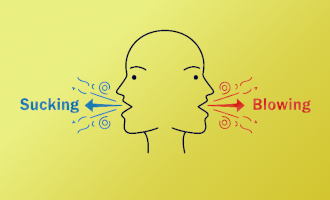
 When it comes to leadership, I like to think of sucking and blowing at the same time as asking for one thing but expecting something else.
I have two examples one good and one bad where I’ve experienced this.
In the first example, I was brought into a new company to oversee the creation of a new service. The company had deep roots as an authoritarian, top-down management culture. Employees, managers included, were successful if they executed to the letter what their bosses asked of them to do. Being a “good little soldier” was the way to be seen as effective and eventually, if you were a good enough little soldier, you didn’t take any risks and stayed out of trouble, you eventually rose to the top of the waiting list and got promoted. It was, and unfortunately still is, a culture of obey, don’t argue and don’t make any mistakes by colouring outside the lines.
To build this new service, I inherited four strong, intelligent, and capable managers who were raised in this top-down follow-orders environment. It became clear to me early in the process, that even though they were all competent managers, they were risk averse and looking to me to make all the decisions. There were several problems with that formula. One, they understood the business much better than I did. Two, if we were to succeed, we needed to work on the edge and do things that had never been done before. I needed them to figure out what the best solutions were to achieve our goals.
Given their background, I started by defining the risk envelope. I outlined the decisions that I expected them to make on their own. I outlined that my expectation was that they would push that envelope and we would fail if they felt they had to run everything by me.
And then, the inevitable happened. One of them made what was unquestionably a bad decision. My resolve of not sucking and blowing at the same time came to the test.
Here’s what I did. I sat down with that person and reminded them that my expectation was that they make tough decisions. I outlined that my expectation was that some of those decisions would be challenging and may not be the same decisions I would make. I congratulated them for taking the bull by the horns and let them know that I was happy that things were progressing well. Then we talked about the mistake and how we could collectively learn from it. Once again I expressed confidence in them and let them know that I had their back. Many more mistakes were made during our journey and each of them was viewed as a learning opportunity. In the end, we were exceptionally successful by any measure and I know for certain that would not have happened under the authoritarian structure they cut their teeth on.
There is another story from my very junior days that comes to mind as I write this. Way back in maybe my first or second year with the bank I heard about our then CEO who was vocal about saying: “I won’t share my opinion because as soon as anyone believes I’m thinking a certain way, everyone starts moving in that direction – even if it’s not the right direction”. It’s a message that stuck with me. If you want people to share their ideas and challenge the status quo, you can’t suck (make all the decisions) and blow (ask them to push the envelope) at the same time.
The second example about saying one thing and doing another isn’t quite such a success.
In one of my roles, I was brought into a new company as a manager in a call centre. Among other things, this company struggled with two diametrically opposed challenges. One was a workforce with an excessive amount of sick time or family time and the other was a health and wellness policy that encouraged people to live healthy lifestyles.
The reason these challenges conflicted with one another was the way the company handles it’s sick or family time. Any family time request was queried and “approved” based on management’s decision into the request’s worthiness. In other words, if a person wanted to stay home to take care of a child, for whatever reason, management made an issue of it. The same mentality held for sick time. After a threshold in a given period, a “doctor’s note” was required for any sick time. Given these two examples, here was management enforcing a “come to work or we’ll give you a hard time” policy.
Then there was the Health and Wellness and life balance stated philosophy that the company would preach which touted the need to think about oneself and maintain a healthy lifestyle.
The reason people took so much time off wasn’t because they weren’t concerned about health and wellness, it was because they were concerned about it. The workplace was stressful, authoritarian and punitive. People needed down-time but they were not provided for. Down time was punitively frowned upon.
The company’s Health and Wellness policy had no teeth – no trust. They were sucking and blowing at the same time.
If there is a lesson to be learned from any of this, it is to ensure that what you say is consistent in how you behave.