
 Nearly every book that has ever been written about how to become a great leader is wrong.
The main problem is that the “expert” advice in thousands of books almost always sticks to what it takes to BE a great leader and not what it takes to BECOME one.
My point is that what a person needs to do “before” they are given a leadership role is different from what they have to do to “maintain” that role.
It is for that reason that there are all kinds of Leaders out there – from terrible, to bad, to average, to good, to great. In a perfect world, there would only be Great leaders… Most leaders are there not because they are great leaders but because they knew what they had to do to get the job in the first place.
There is no shortage of highly competent and reliable managers out there that could be great leaders but who go unrecognized or under-utilized as line managers. Often, these managers get passed by for leadership roles or promotions by less competent people.
People who get the leadership roles understand what it takes to be recognized and sought after for bigger, better and more challenging roles.
Workers can be grouped in four broad categories.
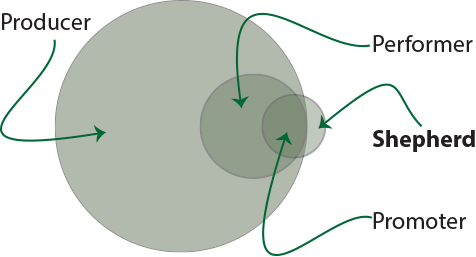
1 – Producers:
Producers are the people in an organization that “get things done”. They have tasks to perform or projects to deliver. They can be managers or entry level. They generally have job descriptions and duties and they work within the parameters they have been provided.
There are producers at all levels within a company. It’s not the task that makes them a producer, it’s the fact that their roles are task oriented. They do what they are being paid to do. Whether that is supervising, managing, training, sales, service, support. The producers mantra is to get the job done.
2 – Performers:
Performers are the “Golden Eagles” in organizations. They go above and beyond and they push the envelope. They take risks. They challenge the status quo. They find new solutions to old problems. They are the “A” rated people in the organization.
When organizations promote people or give them bigger and tougher challenges, they generally pull from the “Performer” group. After all, they have proven themselves able to rise above the every-day tasks. The challenge comes in deciding what top-performer to select.
Performer’s biggest mistakes:
The biggest thing a Performer can do to Not get a deserved promotion is to
1. Letting their hard work speak for itself.
2. Expecting recognition to “just happen”.
Either of these two mistakes will drastically reduce their chances of recognition, raise and reward.
3 – Promoters:
Just like the mantra “what gets noticed gets done” applies to creating the desired behavior with people, “whoever gets noticed gets promoted” applies to rewards and recognition.
Executives are busy and they will see what is easily within their purview. Unfortunately, most of the time, they are dealing with bad news or priorities. It’s just the nature of the job – they are most often guided by crisis where they solve problems and they fix or build things. They must count on others to tell them when good things are happening and when focus is necessary on these good things.
That’s where the promoters come in.
Promoters know how to ensure their successes and talents get noticed. I’m not talking about blowing your own horn in a crass or aggressive way. I’m talking about making sure your successes (and even your failures) get noticed.
This involves a list of subtle and not so subtle actions.
To become a Performer, here are some things to work on:
• Become a Go-To person
• Be Bold
• Present new ideas
• Create a following
• Earn the right to be sponsored
• Demonstrate a strong capacity for growth
• Possess an attractive attitude
• Have the courage to think big and take risks
• Earn trust
• Be loyal
• Anticipate the next business change
• Create diversity in your network
• Have the risk tolerance to abandon the past
• Be a master at conflict resolution, and be diplomatic with people
• Develop Mentoring Relationships
• Quantify Results
• Practice Self-Promotion
• Establish a Bond with Your Boss
• Acquire New Knowledge and Skills
• Build Your Network
• Ask for More Responsibilities
• Act Professionally at All Times
• Be a Team Player
• Create Your Own Opportunities
4 – Shepherds:
Every well tuned organization has its Shepherds. The “C” level people that theoretically carry the weight of the organization.
I talked a bit about how these executives are “busy” people, and that is true. What I left out though is that these executives are indeed “people”.
The best Shepherds:
• Inspire the right action from others.
• Make others feel safe.
This is where all the other books about “being” effective leaders kick in. Talking about what it takes to “be” an effective leader – not what it takes to “become” one.
Learn to he a promoter, of yourself, of your peers, of your team. Celebrate all successes openly. Be disciplined about communicating often and positively. It’s almost impossible to over communicate.
Final thoughts. Here are some things I’ve come to learn that Shepherds are looking for in the people that surround them and help them build the successes they want in their organization.
If they could speak candidly about what they are looking for from their direct reports, here are some of the things they may say:
1. Tell Me I’m Wrong
2. Bring the Bad News First
3. Be Drama-Free
4. Be Exceptionally Positive
5. Take Notes
6. Never Skip the Office Party
7. Don’t Expect to be Rewarded
8. Hold Up Your End
9. Ask How You Can Help – often
10. Have a Solution
11. Know Your Job—and Do It